

Here are the causes of why dive watch bezel won’t rotate and a solution for each problem/cause.
You are Turning the Bezel in Wrong Direction
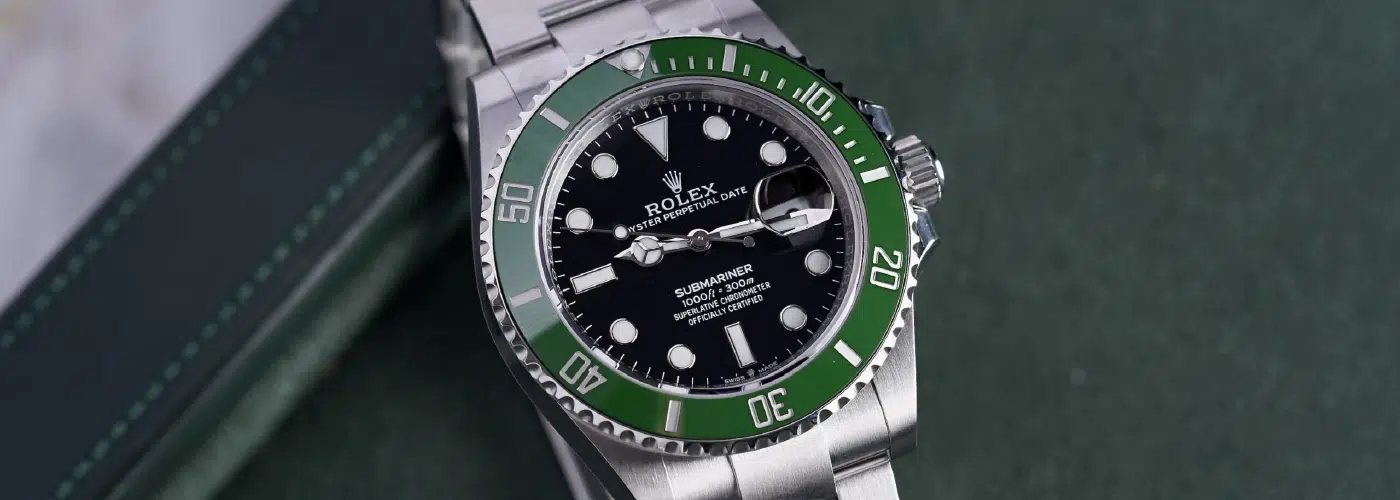
Most dive watch bezels are unidirectional. They rotate counterclockwise only. This safety design prevents an accidental movement from showing less elapsed dive time than the actual time underwater.
Try turning the bezel slowly to the left, or counterclockwise. Don’t force it clockwise. A slight clockwise movement between clicks can be normal, but the bezel should not complete a clockwise rotation. Seiko specifically warns against forcing a unidirectional dive bezel clockwise. If the bezel won’t turn counterclockwise, continue with the checks below.
The Bezel Lock is Engaged
Some professional dive watches have bezel-locking mechanism. Depending on the model, the lock may use:
- A locking lever
- A button
- A screw-down control
- A lift-to-turn bezel
- A press-and-turn system
- A crown that controls an internal rotating bezel
The bezel may appear stuck when the lock is working as designed. According to Aiman Moner, our luxury watch repair and authentication expert, check the watch manual for correct bezel operation. Search using the brand, model number, and terms such as “bezel lock” or “rotating bezel instructions.”
Moner says, release the lock exactly as the manufacturer describes. Don’t pull, press, or unscrew an unknown part. Some external bezels are also secured by factory setscrews that users should never loosen. If an internal bezel is controlled by a crown, make sure you are using the correct crown position. A crown that remains stuck after unlocking needs professional repair.
Salt Crystals are Jammed Under the Bezel
Seawater can enter the narrow space between the rotating bezel and watch case. When the water dries, salt deposits remain. These deposits increase friction and may lock the bezel. This problem is common when a dive watch is not rinsed after swimming or diving in the sea.
You can fix this by only using the water if the watch is water-resistant, its crown is fully secured, and there is no known seal damage. Aiman Moner recommends the following steps:
- Fill a bowl with clean, lukewarm fresh water.
- Place the watch in the water.
- Let it soak for several minutes.
- While submerged, try to turn the bezel counterclockwise with light pressure.
- Continue moving it gently as the salt loosens.
- Rinse away the released residue.
- Dry the watch with a clean, soft cloth.
Seiko and Citizen advise cleaning dive watches in a bowl of fresh water after seawater exposure rather than placing them directly under a strong tap. Don’t use hot or boiling water. Heat can affect seals, adhesives, lubricants, and coated parts.
Sand, Mud, or Dirt is Blocking the Bezel
Find sand, dried mud, skin oil, sunscreen, soap, residue, and dust can collect beneath the bezel, the bezel may feel gritty, become hard to turn in certain positions, or stop completely. For a water-resistant watch with a secured crown:
- Soak it in lukewarm fresh water.
- Turn the bezel counterclockwise gently while it remains underwater.
- Use a very soft toothbrush to clean the seam between the bezel and case.
- Work around the full edge without pushing bristles beneath the bezel.
- Rinse the watch in clean water.
- Dry it with a soft cloth.
Don’t insert a needle, knife, pin, dental pick, or metal tool into the gap. A sharp tool can scratch the case, bend the bezel, displace the click spring, or damage nearby seals. If the watch is vintage, displace the click spring, or damage nearby seals. If the watch is vintage, has unknown resistance, shows condensation, or has not received a recent pressure test, don’t soak it. Consult a watch service professional to remove and clean the bezel instead.
Dried Lubricant or Corrosion has Seized the Bezel
A bezel contains close-fitting metal and polymer parts. Depending on its design, these may include a bezel gasket, retaining ring, click spring, ratchet teeth, or small spring-loaded components. Old lubricant can dry out and mix with dirt. Moisture and salt can also cause corrosion beneath the bezel. Common signs include:
- Very stiff movement around the full rotation.
- Squeaking or scraping.
- Uneven resistance.
- Orange, green, or dark residue near the bezel.
- A bezel that improves briefly after cleaning but sticks again.
This problem normally requires bezel removal and internal cleaning. A watchmaker can remove the bezel with the correct tool, clean the bezel channel, and contact surfaces, and inspect for corrosion or damaged metal. Then, the watchmaker replace worn components, apply the correct watch-grade lubricant where the design requires it, and refit the bezel and test its action.
Moner says don’t spray WD-40, penetrating oil, cooking oil, or general-purpose lubricant around the bezel. An unsuitable product may spread into areas where it does not belong, collect more dirt, affect adhesives, or make later servicing harder.
Also Read: WD-40 Harmful for Watch Movements
The Click Spring is Bent, Broken, or Out of Position
The click spring works with the bezel’s ratchet teeth to create its one-way clicking action. A damaged or displaced spring can jam the bezel instead of allowing it to turn. Possible symptoms include:
- The bezel stopped after a hard impact.
- One section rotates, but another section locks.
- A click feels unusually hard.
- The bezel misses clicks.
- The bezel turns without clicking and then becomes stuck.
- The bezel sits higher on one side.
Stop turning the bezel if it catches at the same point during every rotation. Continued force can damage the spring, teeth, or bezel channel. A watchmaker should remove the bezel, inspect the click spring, and replace or reposition it. The exact spring shape and fitting method very between watch models, so a generic replacement may not work.
The Bezel Gasket is Swollen, Twisted, or the Wrong Size
Many rotating bezels use a thin gasket or friction ring to control fit and movement. Age, chemicals, incorrect lubrication, or poor installation may cause this component to swell, twist, stretch, or leave its groove. A replacement gasket that is too thick can make a newly fitted bezel almost impossible to turn.
The bezel must be removed so the gasket can be checked. The correct repair may involve cleaning and reseating the gasket, replacing a stretched or damaged gasket, or installing the correct size. It may also involve removing excess lubricant or applying only the lubricant specified for that design. Don’t try to loosen the fit by repeatedly forcing the bezel because this may damage the gasket or retaining system.
The Bezel is Bent or Dented
A strong knock can deform the bezel or the edge of the watch case. Even a small change in shape may cause metal surfaces to find. Look for:
- A bezel that sits lower on one side.
- An uneven gap between the bezel and case.
- A visible dent
- Scraping during part of the rotation.
- A problem that started after the watch was dropped or hit.
Don’t press the bezel down or attempt to straighten it with pliers. Ceramic inserts can crack, while aluminum inserts can bend or scratch. A watchmaker should inspect the bezel, case, retaining ring, and insert. A minor alignment problem may be repairable, but a distorted bezel usually needs replacement.
The Bezel was Installed Incorrectly
A bezel can become stuck after a repair, modification, insert replacement, or cleaning if its parts were fitted incorrectly. Aiman Moner says, possible installation problems include:
- The click spring is upside down or displaced.
- The retaining wire is outside its groove.
- The gasket is pinched.
- The bezel is not fully seated.
- The replacement bezel has incorrect dimensions.
- An aftermarket part has poor tolerances.
- Adhesive has entered the rotating joint.
If the problem began directly after service or modification, return the watch to the person who performed the work. The bezel should be removed and assembled again with the correct parts and orientation. Don’t press it into place using a book, clamp, vice, or hard surface. Uneven pressure can damage the crystal, insert, case, or bezel.
The Bezel Insert is Rubbing Against the Case or Crystal
The bezel insert is the marked ring showing the minute scale. If it lifts, bends, or shifts, or is installed at the wrong height, it may rub against a fixed surface and stop the bezel from turning. This can happen after an insert replacement, adhesive failure, impact damage, or installation of an insert with the wrong thickness.
Check whether the insert is raised, loose, or uneven. Don’t push it down with a metal object or add glue around its edge. A watchmaker or experienced watch technician should remove the insert, clean away old adhesive, confirm the fit, and install it at the correct level. A bent or cracked insert should be replaced.
Bezel Won’t Rotate: Safe Troubleshooting Order
Use this order to avoid causing more damage:
- Confirm that the bezel is designed to rotate.
- Check whether it turns counterclockwise only.
- Check for a bezel lock or special operating method.
- Look for dents, uneven gaps, a raised insert, or signs of impact.
- If safe for the watch, soak it in lukewarm fresh water.
- Turn the bezel gently counterclockwise while submerged.
- Clean around the bezel edge with a soft brush.
- Stop if it remains stuck, scrapes, sit unevenly, or catches at one point.
- Have a watchmaker inspect the bezel assembly.
When the Bezel Needs Professional Repair
Contact ChronoStreet for professional services if:
- Fresh-water cleaning does not release it.
- The watch has unknown or untested water resistance.
- The bezel stopped after an impact.
- It is tilted, dented, loose, or raised.
- It catches at the same point during each turn.
- The clicks have disappeared or become irregular.
- Corrosion is visible.
- The problem began after bezel replacement or modification.
- The watch has a ceramic bezel or high-value case.
- There is condensation under the crystal.
Don’t use the watch for diving while the bezel is stuck, too loose, too tight, or operating incorrectly. Dive-watch instructions require the rotating bezel to move smoothly and recommend avoiding a dive when any abnormality is found.