

The Science Behind the End of Life (EOL) Indicator
There is a small microchip inside a modern watch movement, especially from famous Swiss makers like ETA or Ronda. The circuit board constantly measures the electrical voltage of the silver oxide battery or lithium cell.
Remember, a standard watch battery provides 1.55 volts. When the voltage drops below a specific limit, such as around 1.3 volts, the microchip changes the electrical pulse sent to the stepper motor. Therefore, the circuit waits instead of sending one small pulse every single second.
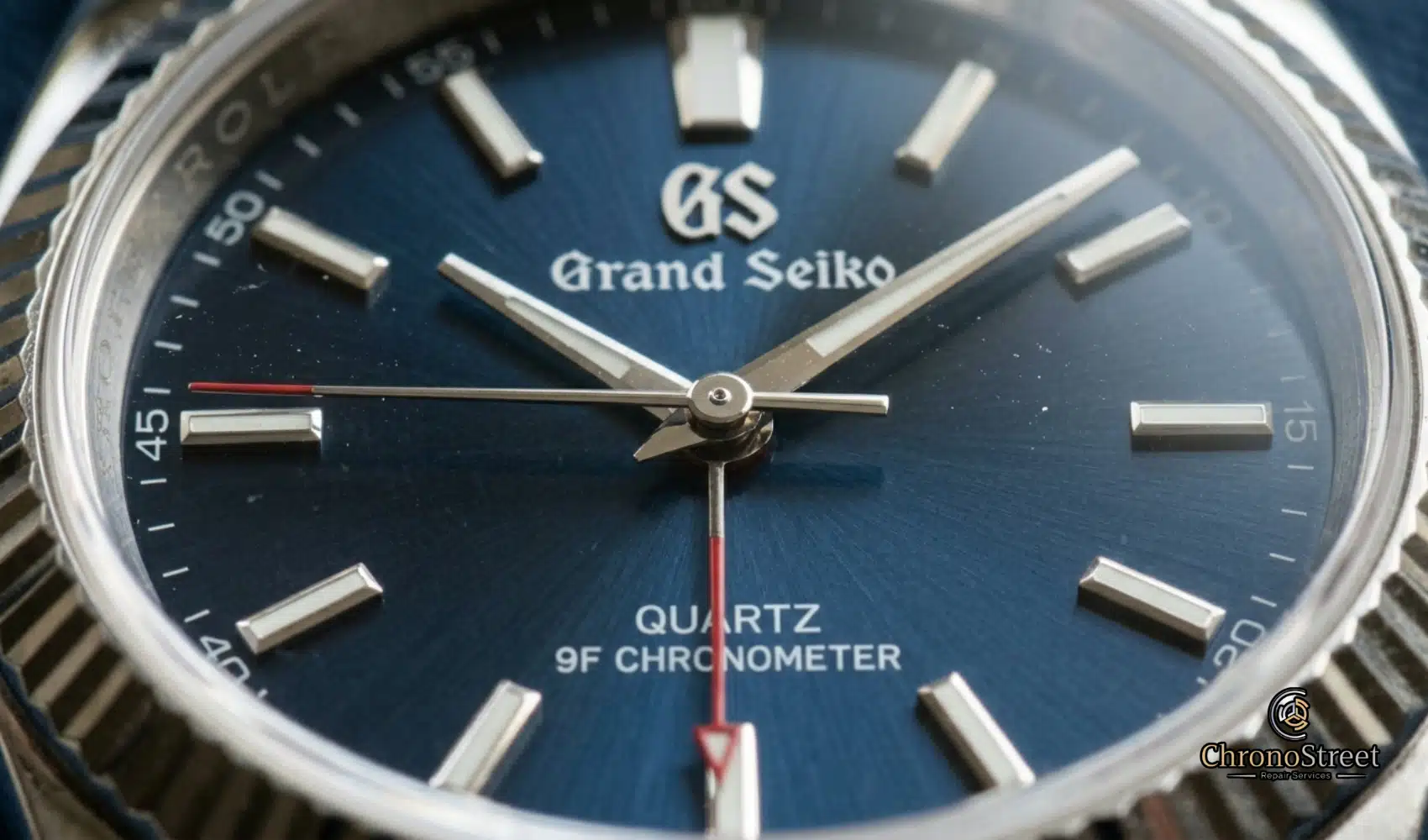
Then, it sends a stronger combined pulse every two seconds, or sometimes every four seconds, depending on the Caliber. Thus, this makes the hand jump multiple steps at once. This smart engineering saves the remaining power reserve because the motor works less often, while the watch still maintains perfect timekeeping accuracy.
Why Do Watchmakers Use the Two-Second Jump?
You perhaps wonder why the watch does not simply show a red light or make a beep sound. Keeping the dial clean and elegant is a very strict rule for lovers of horology. Adding extra digital lights ruins a luxury analog dial design.
Therefore, the jumping second hand is a mechanical solution to an electrical problem because it gives the owner a clear visual warning without needing extra parts on the dial surface. Besides, most luxury brands like Omega, Breitling, and TAG Heuer use this EOL function in their quartz models. It tells the owner they have approximately 1 to 2 weeks to visit a professional watchmaker for a new battery.
Risks of Ignoring the Skipping Second Hand
If you ignore this visual warning and let the watch stop immediately, you invite a serious risk for your timepiece. A completely dead battery left inside the watch case can leak corrosive chemicals over time. The acid from the low battery will slowly destroy the delicate circuit board and eat through the copper coils of the stepper motor. A simple battery replacement is no longer enough if this acid damage happens.
You will need a complete movement replacement, which costs a lot of money. Therefore, you must take action as soon as the second hand starts skipping. You should ask a professional watch service expert if you can’t change the battery immediately. A professional can open the case back accurately and remove the dead cells to protect the quartz watch.
How to Perform a Safe Battery Replacement?
Changing the power cell requires specific technical care. You should never install cheap alkaline batteries because they leak very easily. Therefore, always request a high-quality silver oxide battery from trusted brands like Renata, Maxell, or Energizer. When the watchmaker opens the case back, he must also inspect the rubber O-ring gaskets. Aiman, our watch expert at ChronoStreet, says that these gaskets keep the water and dust outside the case.
Therefore, a proper service includes replacing the battery, applying fresh silicone grease to the gaskets, and doing a dry pressure test to ensure water resistance. Use proper non-magnetic brass tweezers. Remember, this is mandatory because the watch movement does not get magnetized during the repair process.
Also Read: 5 Most Common Myths About Mechanical Watches
Does This Happen in Mechanical Watches?
Some beginners confuse this skipping behavior with that of mechanical watches. A mechanical watch, whether it is automatic or manual wind, does not have a battery or an End of Life Indicator. If a mechanical watch with a second hand skips or stutters across the dial, it means there is a physical mechanical fault. Thus, this usually points to low friction on the sweep second pinion spring or a broken gear tooth inside the going train. The intentional skipping behavior as a low-power warning is strictly a programmed feature of a quartz watch.