

Why Do People Do This? (Steel vs. Ceramic)
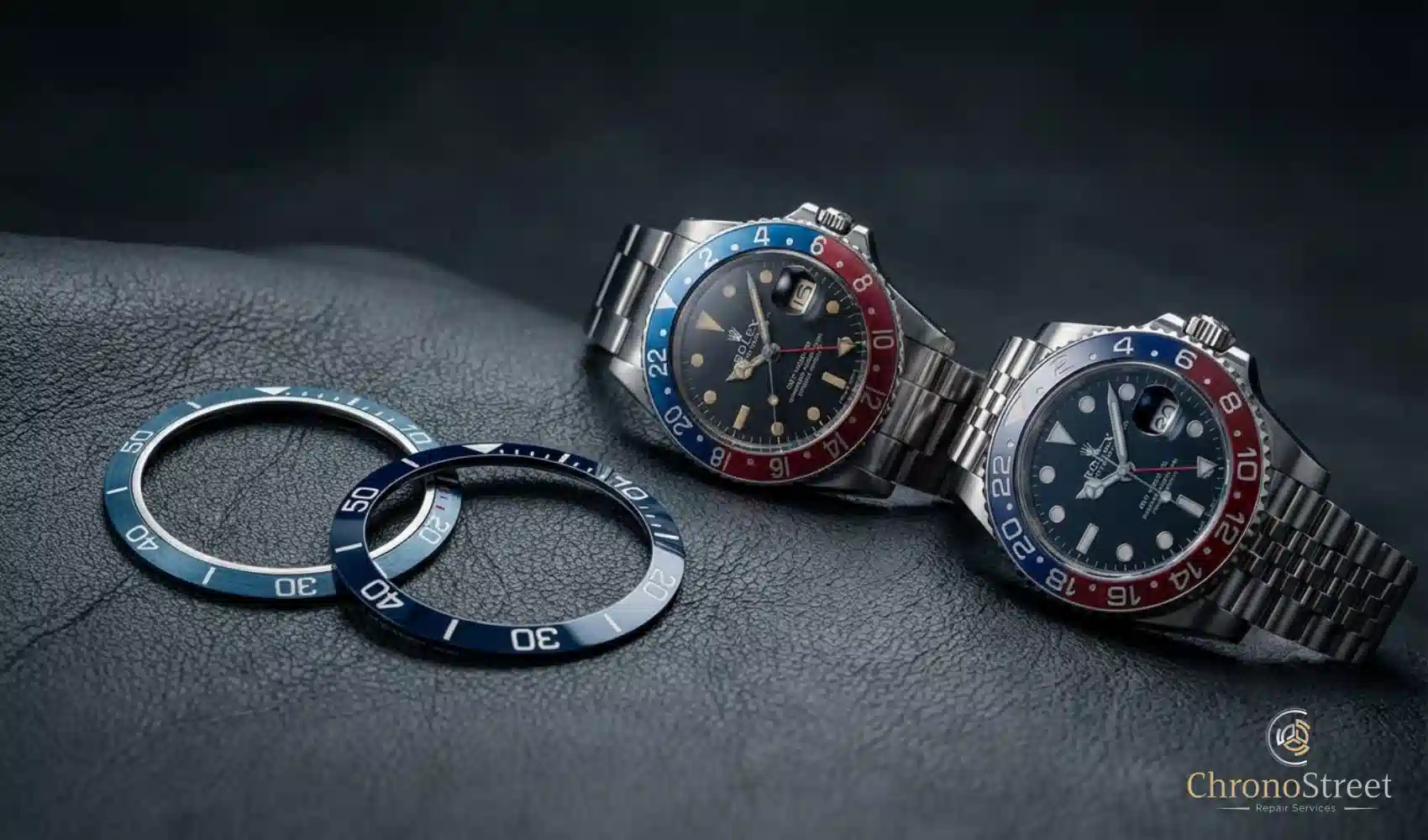
Most affordable dive watches come with an aluminum or steel bezel insert, which is cheap, lightweight, and flexible. However, the problem is that it scratches easily. On the other hand, ceramic is virtually scratch-proof, and you can drag it across a door frame, and the door frame will lose. It also has a wet, shiny look that stays new forever.
But ceramic is very brittle, which means if you drop your watch on a tile floor, it may shatter like a dinner plate. Ceramic reflects light differently. Some people hate the “bling” factor of this material and prefer the muted, tool-like look of matte aluminum.
Hidden Compatibility Issues: What Fits and What Does Not
This is where 90% of beginners fail. You can’t just buy any ceramic insert that says “42mm” and expect it to fit.
Flat vs Sloped (The Crystal Gap)
- Flat Inserts: Your stock steel insert is likely flat, and if you buy a flat ceramic insert, it will probably fit your stock crystal perfectly.
- Sloped Inserts: Many premium ceramic inserts are sloped with an upward angle toward the center to mimic the look of a Rolex Submariner. If you put a sloped insert on a watch with a flat crystal, you will have ha ideous gap. The inner edge of the inset will sit higher than the glass. Thus, it will look bad and catch dirt.
Therefore, if you buy a sloped insert, you almost always need to upgrade your crystal to a Double Domed Sapphire to fill that gap.
Inner and Outer Dimensions
Just because an insert is for a “Seiko Diver” does not mean it fits your diver. Dimensions are measured to the tenth of a millimeter. The outer diameter must fit inside the metal bezel ring, and if it is too big, it won’t snap in. On the other hand, if it is too small, you will see an ugly metal ridge. The inner diameter must clear the crystal. However, the bezel will bind and won’t turn if it is too tight.
The Pip Problem
Ceramic inserts usually have a lume pip at the 12 o’clock mark. It is just a blob of glue on cheap ceramic inserts, and this blob can fall out. However, if you buy a quality one, it will have a proper plastic or glass lens. Check if the pip protrudes from the back of the insert. If it does, it may not sit flush in your bezel ring without sanding.
The Installation Process
Installing steel is easy because steel bends. Ceramic does not bend. But if you force it, it snaps. Here are the steps to install it:
Step 1: Removal
You need to get the old insert out. There are two ways:
- The Solvent Method: Remove the bezel assembly from the watch using a case knife. Soak the whole bezel in a golf grip solvent or “Goo Gone” for a few hours. The glue will turn to mush, and the insert will fall out. Remember, you must avoid Acetone because it can melt the rubber gasket inside the bezel.
- The Heat Method: Use a hair dryer to heat the bezel until it is too hot to touch. Pry the old insert up with a sharp knife, but be careful not to warp the steel bezel ring.
Step 2: Cleaning
Although this is a boring part, it is very important. You must remove every single atom of old glue from the bezel ring. If you leave a tiny lump of old glue, your new ceramic insert will sit unevenly. When you press down on it later, that high spot will act as a fulcrum and crack your ceramic insert.
Step 3: The Bezel-First Rule
Don’t stick the insert into the bezel ring while the ring is off the watch. Install the bare metal bezel ring onto the watch case first and ensure it clicks and turns properly. Next, apply the adhesive sticker to the bezel ring, and then place the ceramic insert into the bezel.
Remember, snapping a bezel ring onto a watch case requires force. If the ceramic insert is already inside, the flexing of the metal ring can crush the ceramic. That’s why ChronoStreet’s watch repair experts recommend installing the ceramic last.
Troubleshooting Common Issues
Here are a few common issues and ways to resolve them:
The Bezel Won’t Turn
You probably pinched the O-ring gasket. There is a thin rubber gasket inside the metal bezel, which requires lubrication with silicone grease. Remember, you must not use WD-40. The bezel will seize if it is dry or pinched. Therefore, pop it off, grease the gasket, and try again.
The Click Spring is Bent
There is a flat metal ring with two little tabs sticking up under the bezel, which is the click spring. If you are not careful when removing the bezel, you can flatten these tabs. If the bezel spins in both directions or does not click, you must bend these tabs back up very slightly.
The Insert is Not Aligned
You stuck it down, and now the 12 o’clock marker is slightly to the left. Don’t panic. If you have used the 3M adhesive rings, you can sometimes heat them with a hair dryer and wiggle them. We recommend using the GS Hypo Cement instead of the sticker because it is slow drying glue and gives you about 10 minutes to wiggle the insert around and get it aligned before it sets hard.
Also Read: What Causes the Amplitude Issue in Rolex 3235 Movements
Final Words
Changing from steel to ceramic is a great upgrade because it makes a cheap watch feel expensive. However, it is a difficult process because it is a change in material properties. You must treat ceramic with respect and double-check your crystal clearance. Never ever force it.