

First, Check If You Really Need to Remove a Link
Many bracelets have a small adjustment built into the clasp. If your watch is only slightly loose, use that instead. It takes seconds and needs no tools. Remove links only when the bracelet is loose by a full link or more. One link is usually 9 to 11 mm.
How to Check the Fit: Wear the watch, let your arm hang for a minute, then slide it. A good fit moves about 10 mm to 15 mm along your wrist but will not slide over your wrist bone, and one fingertip should fit underneath.
Know Your Bracelet Type
Moner says “knowing your bracelet type decides which tool you need.” Turn the bracelet over and look at the sides of the links.
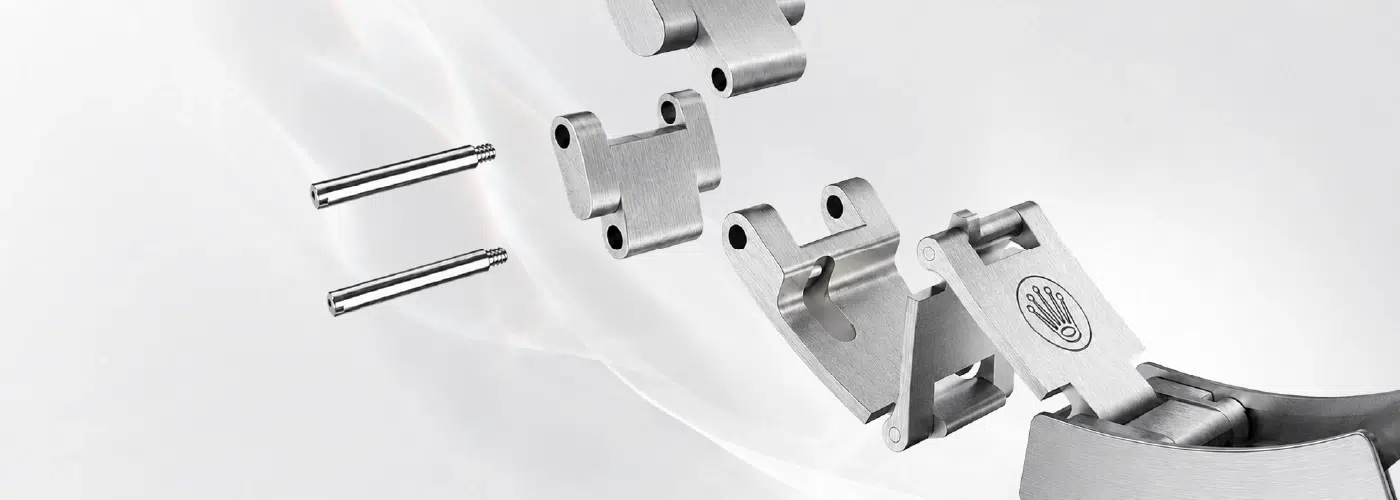
| What You See | Type | Tool Needed |
| Small slotted screw heads on both edges | Screw links (most Rolex, Omega, Tudor) | Precision flat screwdriver (1.6 mm Oyster, 1.4 mm Jubilee) |
| Tiny arrows and smooth pin ends | Friction pins (most Seiko, Citizen, Tissot) | Pin pusher and small hammer, or a link removal tool |
| Split pin with a small collar | Pin and collar | Pin pusher + tweezers for the collar |
| No links, rubber or fabric strap | Not adjustable by links | Use the clasp or change the strap |
Only the links closest to the clasp come out. They are marked with a small arrow on the underside, and the arrow shows the direction to push or turn.
What You Need?
- A precision screwdriver or a pin pusher, depending on your bracelet.
- A bracelet holder or a cloth-lined tray, so the watch can’t slip and scratch.
- Fine tweezers.
- A small dish for the pins and screws: they are about 2 mm long and disappear easily.
- Optional: one drop of low-strength threadlocker (Loctite 222) for screw links.
I strongly advise ChronoStreet visitors and DIYers not to use a knife, nail scissors or a hammer on a screw bracelet. Hammering a screw link will crack it – says Aiman Moner.
Step-by-Step: Take Links Out of a Watch
Here are the steps Aiman Moner usually follows to take links out of a watch at ChronoStreet.
Step 1: Count the links to Remove
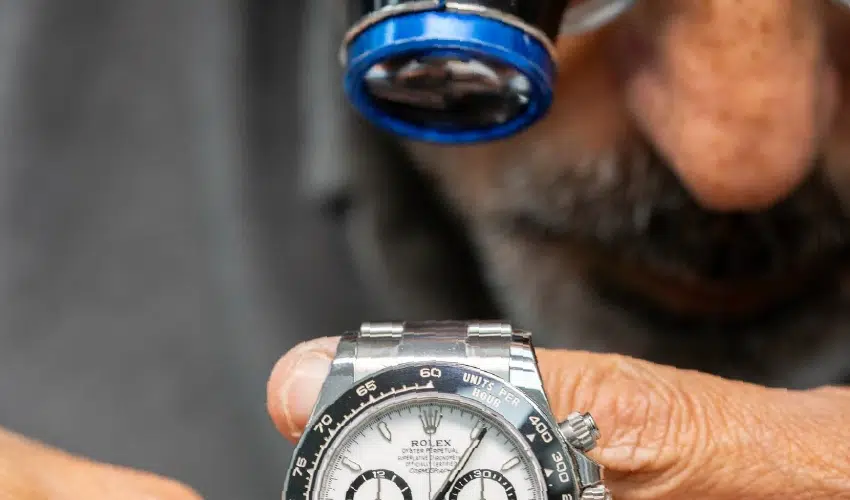
Pinch the extra slack on your wrist and compare it to one link. Take out one link for each link’s worth of slack. If you need to remove two links, take one from each side of the clasp. Start with one link. You can always remove another, but a link you have cut or damaged can’t be put back.
Step 2: Hold the Bracelet Steady
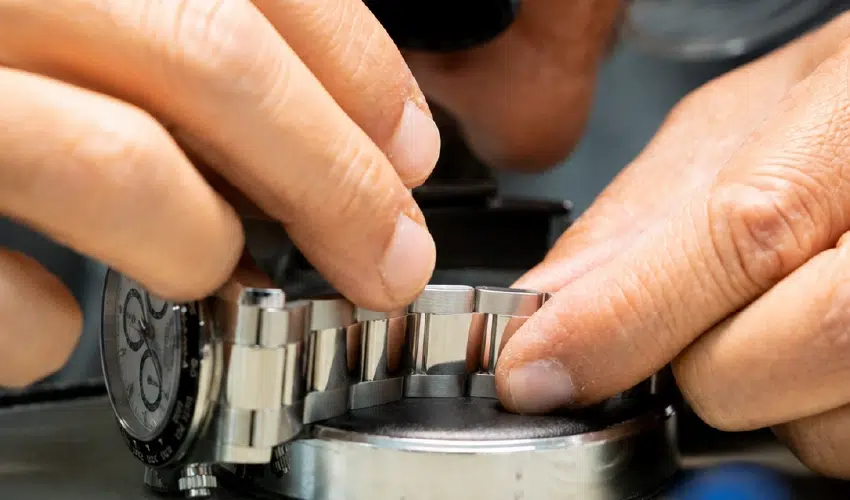
Clamp the bracelet in the holder with the arrows facing up, or lay it flat on a cloth. Never hold it in mid-air. Almost every scratch happens because the bracelet moved.
Step 3: Remove the Pin or Screw
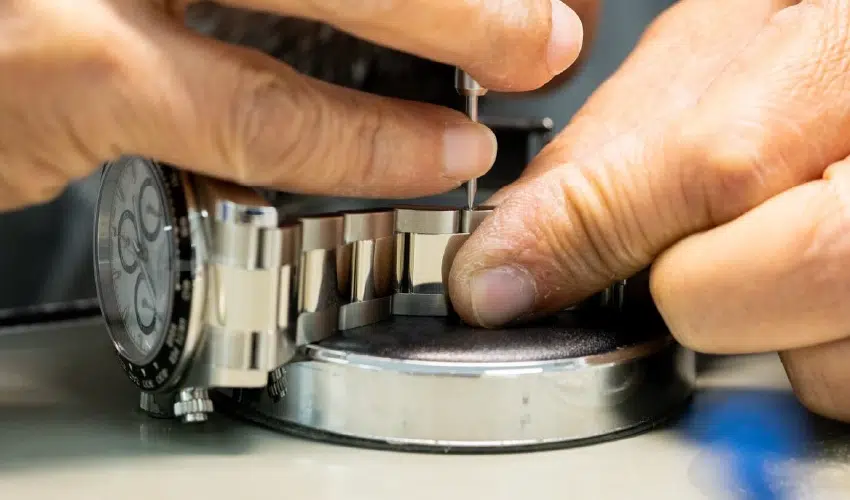
Screw Links: Seat the blade fully in the slot so it fills the slot edge to edge. Press down hard as you turn counter-clockwise. The first quarter turn is stiff because of the factory threadlocker. That’s normal. If it won’t move, check your blade size, add a drop of penetrating oil, wait for 10 minutes and try again.
Pin Links: Place the pin pusher on the pin end, on the side the arrow points away from, and push or tap gently until the pin starts to move. Then pull it the rest of the way out with tweezers. If there is a collar, catch it before it rolls away.
Put every pin and screw straight into your dish.
Step 4: Slide the Link Out
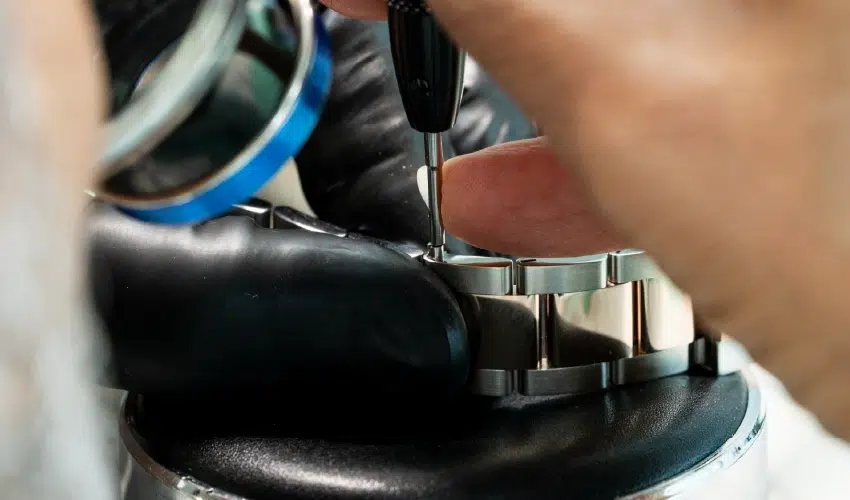
The two halves should separate with no force at all. If you have to twist or lever them, a pin or screw is still engaged. Go back and check. Repeat on the other side of the clasp so the removal stays even.
Step 5: Join the Bracelet Back Up
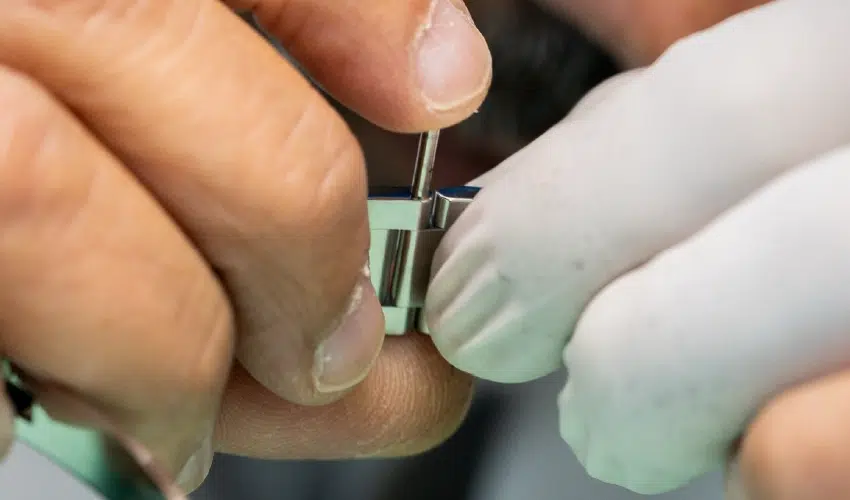
Line up the two sections flat on the bench so the holes are perfectly straight. Misaligned holes are the main cause of bent pins and stripped threads.
- Screws: Add a pinhead of threadlocker, start the screw by hand for the first two turns, then tighten only until the head sits flush. These screws need very little force.
- Pins: Push the pin back in the opposite direction to the arrow until it sits flush on both sides. Fit the collar first if your bracelet uses one.
Step 6: Check Your Work
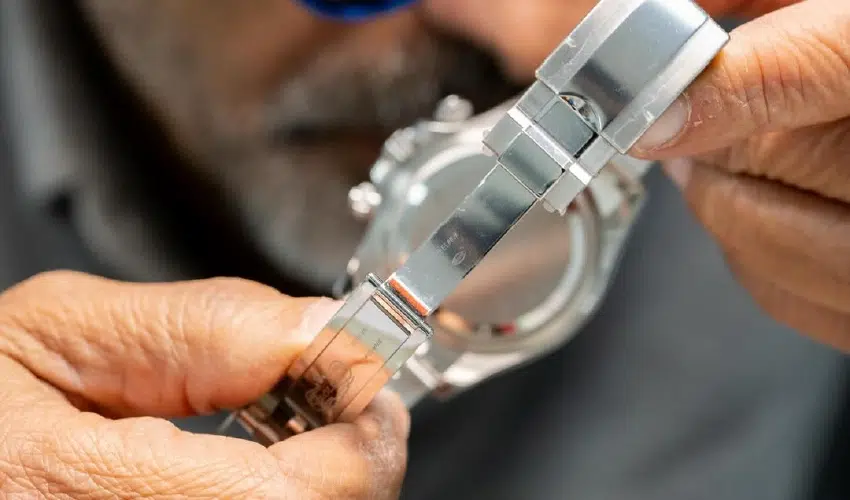
- Every pin and screw sits flush, none sticking out.
- The bracelet bends smoothly with no stiff link.
- Pull firmly at each joint; nothing shifts.
- The clasp sits in the middle of the underside of your wrist.
- Spare links and pins are stored with the watch box.
Moner says: it is very important to check the screws again after a week and after a month. New screws can settle loose.
Mistakes That Cost Money
- Wrong Screwdriver Size: A blade that is too narrow rounds off the screw head. This is the most common failure.
- Taking All Links From One Side: The clasp ends up off-center and the watch sits crooked.
- Hammering a Screw Link: Screws unscrew. They never get hammered.
- Over-Tightening: Stripping the threads inside a link means buying a new link.
- Losing a Link or Pin: Original links are expensive and slow to order. Keep them with the box, a complete watch sells for more, just as an unpolished case protects resale value.
When to Let a Professional Do it?
Take the watch to a watchmaker if it is gold or platinum, vintage with folded or riveted links, still under warranty, or if a screw is already stuck – says Aiman Moner. Soft metals mark permanently, and vintage bracelets use methods that modern tools will damage.
Adjusting your own bracelet does not void a warranty by itself, but any damage you cause is not covered. Most jewelers charge very little for sizing, and at ChronoStreet our watchmakers can size any bracelet while you wait.
Frequently Asked Questions (FAQs)
How many links can I take out?
Usually four or five per side. If you need more than 8 to 10 in total, the bracelet is the wrong size for your wrist and needs a shorter configuration.
How much shorter does one link make the bracelet?
About 9 mm to 11 mm on a wide link bracelet, a little less on finer five-piece bracelets.
What way do the screws turn?
Counter-clockwise to loosen on almost all modern bracelets. The arrow on the underside of the link confirms the direction for your watch.
Do I need a threadlocker?
It is not essential, but factories use it. Without it, screws can slowly back out and a link can fall off. Use low-strength Loctite 222 so the screw can still be removed later.
Can I put the links back later?
Yes, as long as you kept the links and pins. That’s why they should live in the watch box.