

Key Takeaways: What to Do Now
- Immediate Safety: Don’t wear the watch until the crown screws down. An open crown means no water resistance and a high risk of rust.
- Quick Checks: Gently push and turn counterclockwise until you feel a click. Clean visible grit with unwaxed dental floss or a soft brush. You can blow out dust with a hand blower. Avoid solvents like WD-40 to prevent damage to watch movements.
- Stop DIY when: If the crown still slips, grinds, or feels loose, stop and book a professional repair because stripped threads need tube replacement.
How a Screw-Down System Works
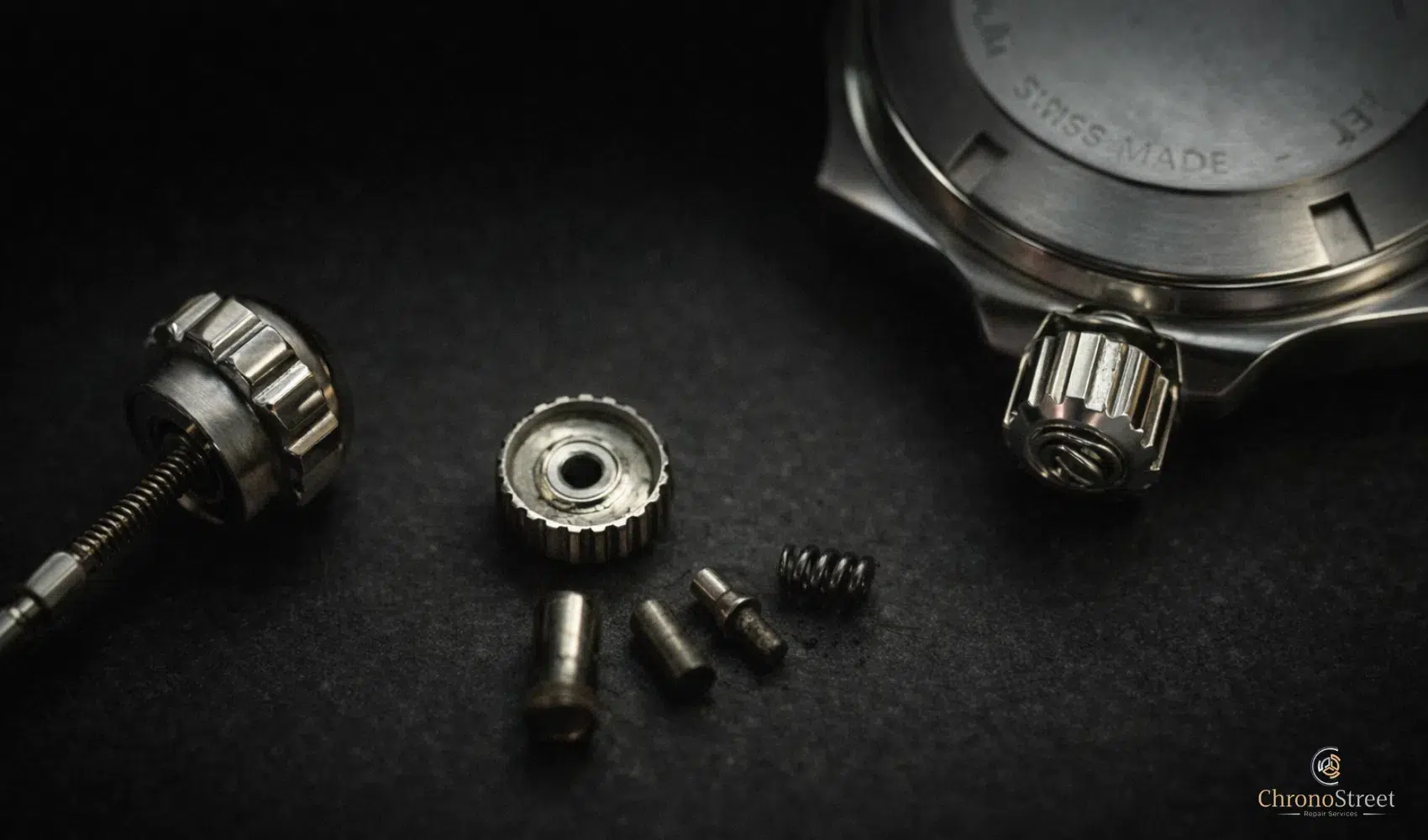
The watch crown and the side of your watch case are like a bolt and a nut. Sticking out from the side of the watch is a small metal pipe called the case tube or pendant tube. It has micro-threads on the outside. The inside of your crown has matching threads.
The threads lock together when you push the crown in and turn it. Remember, this action squeezes the O-ring gaskets, which are tiny rubber rings, tight against the metal. The purpose is to seal the watch from outside moisture. However, the whole system fails if even one thread gets damaged.
Read: How to Dry Out a Foggy Rolex Dial at Home
Main Causes Why the Crown Won’t Catch
There are four specific reasons why you can’t screw down the crown back into the case.
Cross-Threading or Stripped Threads
The threads cut into each other if you push the crown in at a slight angle and start turning. Over time, this scrapes the metal away. Watches made of softer metals, like 18k gold or titanium, strip much faster than those made of 316L stainless steel. Once the threads are flat, they can’t grab the case tube.
Sand and Micro Grit
Microscopic grains of sand or dried salt can hide inside the thread pitch if you recently took your watch to the beach. When you try to close the watch, this dirt acts like a wall and blocks the threads from overlapping.
A Bent Winding Stem
The metal rod connecting the crown to the watch movement inside is very thin. That stem will bend slightly if you accidentally hit your watch against a doorframe while the crown is unscrewed. A bent winding stem forces the crown to hit the case tube at a crooked angle, making it impossible to screw down properly.
Broken Internal Spring
A proper screw-down crown is spring-loaded. When you unscrew it, a tiny spring pushes the crown outward so you can wind the watch or set the time. However, if this spring breaks or gets stuck inside the crown cap, it stops the crown from compressing back onto the tube.
The Big Risks: Can You Still Wear It?
Your watch is in danger if the crown won’t lock down. You should not wear it until you resolve the problem.
- Zero Water Resistance: The rubber seals are no longer compressed. Even washing your hands, heavy rain, or high humidity can let moisture into the dial. Thus, this will rust the keyless works, which include the gears that let you set the time, as well as destroy the dial paint.
- Stem Snapping: An open crown sticks out far from the watch case. It can easily catch on your pocket or jacket sleeves and snap off completely.
- Dust Accumulation: Dust can travel down the open tube and settle inside the mainspring or the delicate balance wheel, which can stop the watch completely.
Safe Fixes You Can Try at Home
You might have a bad alignment or a dirty tube if the threads are not entirely ruined. Try these gentle methods first:
The Counter-Clockwise Click Method
Never just push and turn right (clockwise) blindly. Instead, push the crown in very gently against the tube. Now, slowly turn the crown backwards (anti-clockwise). Keep turning slowly until you feel or hear a tiny click, which means the start of the crown thread has dropped into the start of the tube thread. Once it clicks, turn clockwise to screw it down securely.
The Dental Floss Trick
Grab some unwaxed dental floss if dirt is the problem. Wrap it once around the exposed threads of the case tube and pull it back and forth gently. It will pull out hidden grease and sand. You can also use a soft, dry toothbrush to sweep the threads. Never use aggressive chemicals like WD-40, because they will melt the rubber O-ring gaskets instantly.
When to Send It to a Professional Watchmaker
No DIY trick will fix your watch if the threads are completely worn. Here is what a professional watch repair service will do:
- Opening the Watch: A professional watchmaker will open the case back and press the tiny stem-release button on the movement to pull out the crown and stem.
- Extracting the Tube: The old case tube is usually glued into the case with a strong thread-locker like Loctite. The watchmaker uses targeted heat and a special broach tool to rip the stripped tube out of the metal case.
- Installing New Parts: The expert will press a brand-new tube into the case and attach a new genuine crown to your existing winding stem.
- Pressure Testing: After closing the watch, the watchmaker runs it through a dry pressure testing machine to prove it meets its original ATM rating for diving.
Also Read: What Causes a Rattling Sound Inside an Automatic Watch
How to Prevent Crown Damage Later?
Stop winding or setting your watch while it is still on your wrist. That way, you can protect the new watch parts. Taking it off your wrist completely removes weird angles and sideways pressure. Similarly, rinse your watch with clean, warm tap water after swimming in the ocean or a chlorinated pool. Thus, this washes away salt crystals before they can dry and act like sandpaper on the threads.
Frequently Asked Questions (FAQs)
Why won’t my screw-down crown catch or screw down?
Most often the crown or case-tube threads are cross-threaded or stripped, or tiny sand/salt grit is blocking the pitch. A bent winding stem or a broken internal spring can also stop engagement.
Can I force the crown closed?
Never force it. Forcing can snap the stem or ruin threads and seals. It can make water damage much more likely. Therefore, stop and try gentle cleaning or seek professional help.
When should I send it to a watchmaker?
If threads are worn, the stem is bent, or the crown still won’t engage after cleaning, a watchmaker will remove the old tube, fit a new case tube and crown, and pressure-test the watch.
Is water damage covered under warranty?
Coverage depends on brand warranty and whether the watch was used per manufacturer guidance. Water ingress after a failed crown is often considered user damage. Check your warranty and service center.